

On Monday, Philadelphia City Council moved forward with a comprehensive package of bills designed to reduce Immigration and Customs Enforcement (ICE) operations within the city.
Mayor Cherelle Parker’s administration signaled it would not stand in the way of the legislation despite calling several provisions “legally problematic.”
Preliminary Approval
The seven-bill “ICE Out” package received preliminary approval in a series of unanimous voice votes during a packed committee hearing, with immigrant advocates filling the council chambers to show support.
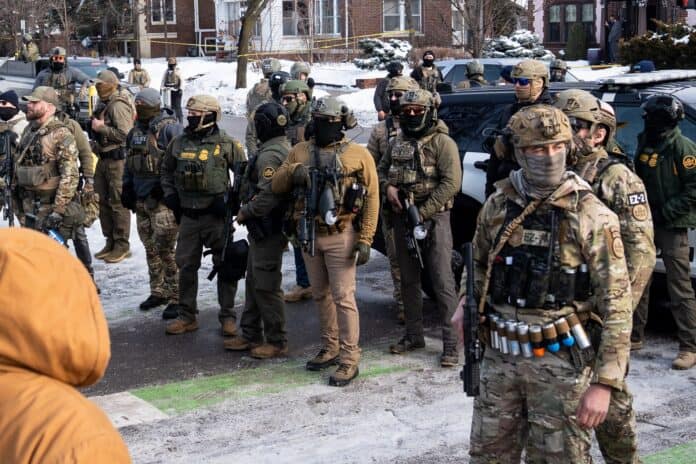
The legislation would ban ICE agents from wearing masks, prohibit the use of city property for immigration enforcement staging areas, and formally codify Philadelphia’s sanctuary city status into law.
Philadelphia is said to be home to around 76,000 “illegal” immigrants at the time of writing.
Bills Target Federal Immigration Operations
Council members Rue Landau and Kendra Brooks, who spearheaded the legislative package, framed the measures as protecting Philadelphia’s immigrant population from what they described as an aggressive federal deportation campaign.
Landau told the packed chambers that “this legislation draws a clear line. Philadelphia will not be complicit with policies that undermine the safety and dignity of our neighbors.” Activists responded to her words with applause.
The anti-masking provision would apply to all law enforcement officers at local, state and federal levels, requiring them to display badges and prohibiting unmarked vehicles except for specific exemptions including SWAT teams, medical purposes, and undercover work.
Violation of these rules could result in prosecution by District Attorney Larry Krasner, who has previously stated he would prosecute ICE agents who violate local laws, though no prosecutions have been brought forward to date.
The committee approved all measures in the package, with five council members absent from the votes: Mike Driscoll, Mark Squilla, Katherine Gilmore Richardson, Curtis Jones Jr., and Brian O’Neill, the chamber’s only Republican member.
Parker Administration Expresses Limited Support
Charlie Ellison, executive director of the Office of Immigrant Affairs, represented the Parker administration during the hearing and delivered a carefully worded response that appeared to clear the path for the legislation.
“We understand and appreciate the intent behind this legislation,” Ellison said, noting that the city already maintains some longstanding protections for immigrants.
While Ellison said the administration “wholeheartedly supports” one bill updating the city’s Fair Practices Ordinance to create a protected class based on immigration status, he reminded everyone that lawyers are still assessing the “legally problematic language” in most of the proposals.
The administration cited particular concerns about the anti-masking bill, noting that “similar bills are in litigation in other states.”
Despite these legal concerns, the administration’s testimony suggested Parker would not use her veto power to block the legislation, even though Parker herself is yet to make a decision. The signs are there, though, that the administration won’t block the bills.
Comprehensive Restrictions on Federal Operations
The legislative package includes multiple restrictions on immigration enforcement activities within Philadelphia. Beyond the masking prohibition, the bills would formally ban the city from entering into 287(g) collaboration agreements with ICE, which allow local police to work directly with federal immigration authorities.
Additional provisions would prohibit ICE from establishing staging or processing areas on city property and prevent city agencies from collecting immigration status information from residents. The measures also include enhanced protections for immigrants in city services and employment.
Fifteen of the 17 council members have already cosponsored the package, giving it a veto-proof majority that would allow the legislation to become law even if Parker chose to oppose it. Only Driscoll and O’Neill have not signed on as cosponsors.
Final Vote Expected This Month
A final council vote could take place on April 23. If passed, Parker would have 10 days to either sign the bills, veto them or let them become law without her needing to sign them,
Given the veto-proof majority and the administration’s measured response Monday, the legislation appears likely to become law.
Once enacted, the bills would take effect 60 days after becoming law, creating what supporters describe as some of the strongest local protections against federal immigration enforcement in the nation.

