Philadelphia has a long history of introducing institutions that open doors to groups previously excluded from essential services. The city is currently celebrating that legacy while continuing to build new forms of access through modern programs. One example sits near the intersection of North 15th and Spring Garden streets, where a specialized facility provides books and technology to residents who cannot use standard print materials.
The Library of Accessible Media for Pennsylvanians, known as LAMP, serves people across the state who have temporary or permanent disabilities that prevent them from reading traditional books. The facility is one of only two locations in Pennsylvania dedicated to this work. The other operates through the Carnegie Library of Pittsburgh. Together, they connect readers statewide to accessible materials through a program run by the Library of Congress’ National Library Service for the Blind and Print Disabled. Through that nationwide system, eligible participants receive books and equipment free of charge.
The service reaches people who cannot physically hold a book or read conventional text. According to chief librarian Tara Lynne Murphy, the program includes anyone who cannot pick up a book with two hands and read it in the usual way. That description includes people with vision challenges, readers with dyslexia, individuals experiencing declining eyesight, and those who have lost the ability to use their hands because of injury or illness. Materials are mailed directly to patrons across Pennsylvania because the collection does not operate as a browsable in-person library.
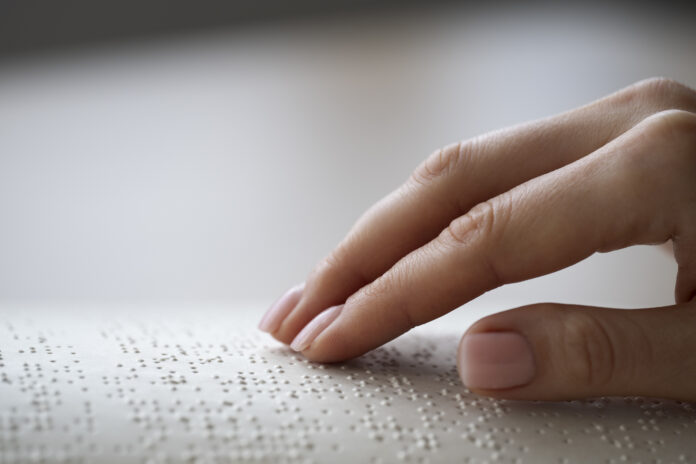
Inside the building, the most visible feature is a large Braille collection stored on hundreds of movable shelves. These stacks contain a wide range of titles available to blind readers. Braille books differ sharply from standard printed books because the letters are embossed in raised dots that can be read by touch. That physical format requires much more space. Murphy explained that a standard book may expand into multiple volumes when produced in Braille. A well-known example from the collection is The Joy of Cooking, which requires about 30 Braille volumes.
The shelves include titles for adults and children. Large print books also appear throughout the collection for readers with reduced vision. In addition to printed material, the library distributes audiobook players and refreshable Braille devices. The electronic devices can arrive with titles already loaded or give users the ability to download books directly.
The service places attention on children’s literacy. Twenty-five percent of the collection is dedicated to young readers. Murphy explained that Braille literacy supports brain development for children who are born blind. Students who reach school age without the ability to read Braille can face difficulties later in their education.
To help families read together, the library carries “twin vision” books. These books contain standard printed text with a clear plastic Braille sheet placed on top of the page. The design lets blind and sighted readers follow the same story side by side. Families with different vision abilities can read the same book at the same time.
The collection also contains titles designed for readers with dyslexia. Murphy explained that dyslexia is common and often overlooked within the education system, particularly among children. Providing access to these materials gives people across Pennsylvania the opportunity to obtain resources that might otherwise remain difficult to locate.
Readers who enroll in the program fill out a detailed profile describing the types of books they enjoy. LAMP keeps track of titles that patrons read even after the books are returned. Staff use that information to choose additional materials based on each person’s preferences. A patron’s profile may include specific requirements about book content. Murphy explained that certain readers request romance novels with no profanity or explicit material. Amish romance titles appear frequently among those requests. The library also carries detective stories and other genres for readers who want more graphic content.
A recording studio operates within the building as another way to expand the library’s collection. Volunteers read books aloud so they can be distributed as audiobooks. The studio reopened last summer and soon drew attention after recent media coverage. According to Murphy, hundreds of people submitted applications to volunteer. Those interested must complete the full process required for Free Library volunteers, including background clearances.
One of the volunteers, Kate Loitz, has spent about 50 years recording books for accessible library services. She began her work at a closed-circuit radio station before recording books for the Talking Book and Braille Library program in Seattle. When the Philadelphia recording studio reopened, she became the first person to record there.
Loitz studied English and works as both an actor and singer. She explained that audiobook recording gives her the chance to deliver stories to people who specifically requested them. The titles produced in the studio are not chosen randomly. Each book already has a reader waiting for it, and once the recording is finished, it enters the permanent collection.
Murphy described the studio’s recording process and explained, “It usually will take about 20 to 30 hours of actual recording time to get that book done, and then we have the back-end processing of making sure it’s marked up with the right chapters and that sort of thing.”
The library is able to produce these recordings because the National Library Service for the Blind and Print Disabled provides flexible copyright rules. Books that have not already been recorded by a commercial narrator can be recorded locally. Many of the titles selected for recording focus on Philadelphia or Pennsylvania topics. Staff coordinates with the Pittsburgh location to prevent both facilities from recording the same book.
Murphy said the library intends to expand programming inside the building. During the past two and a half years, the organization doubled the size of its staff so more outreach can take place across the state. Future plans include educational programs and specialized resources such as Braille LEGO sets. Another concept under consideration is a “Cooking without Looking” program designed to teach cooking skills to people with visual impairments.
The work taking place at LAMP exists within a city known for introducing institutions that opened opportunities for groups previously denied access. Philadelphia recently celebrated one of those historical milestones during a festival hosted by Drexel University. The event commemorated the Women’s Medical College of Pennsylvania, which opened in 1850 as the world’s first medical school to admit women.
Charles Cairns, the current dean of Drexel University College of Medicine, explained that women once faced barriers when trying to enter professional medicine. Before the college existed, women struggled to gain exposure to medical education and encountered discrimination when attempting to study medicine.
Early students also faced hostility when they attempted to participate in clinical training. One incident occurred in 1869 at Pennsylvania Hospital. Newspapers described the event as the “Jeering Episode.” Male medical students directed insults toward female students and followed them into the street. The Philadelphia Evening Bulletin described how the group used insolent and offensive language toward the women.
Despite those conditions, the Women’s Medical College trained generations of physicians and eventually evolved into what Cairns described as the largest private medical school in the United States that grants M.D. degrees.
Recent community programs continue addressing needs across Philadelphia. Mayor Cherelle Parker appeared at a PHLCares celebration on Tuesday that announced a $500,000 donation to Hope 220, a housing solution center operated by the Salvation Army on behalf of the city. The program provides housing support services to Philadelphia residents.
Within that environment, the Library of Accessible Media for Pennsylvanians continues distributing books, technology, and audio recordings to readers throughout the state who cannot access traditional print. Volunteers move through the recording studio, staff prepare materials for mailing, and patrons across Pennsylvania receive Braille volumes, large print books, and audio devices that connect them to the library’s collection.