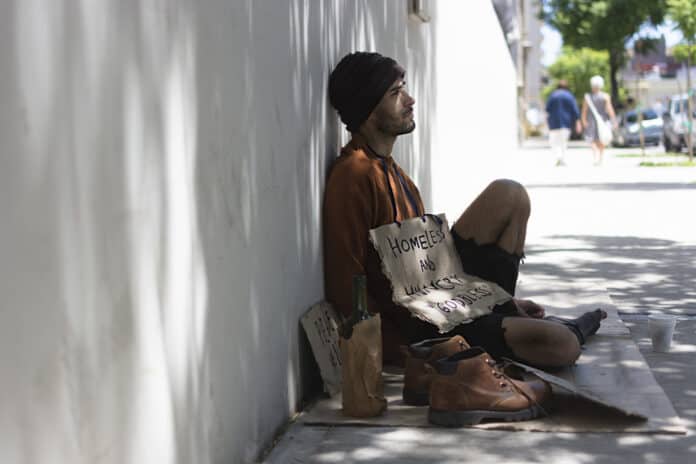
Philadelphia is moving forward with a plan to reach what city officials describe as “a functional zero in homelessness,” defined as a point where no one seeking shelter is turned away because there is no space available. The strategy centers on adding 1,000 long-term shelter beds, upgrading existing facilities, and expanding health services inside shelters.
The effort builds on an announcement by Mayor Cherelle Parker during her annual State of the City address on Dec. 19, 2025, at the Temple Performing Arts Center. After delivering her speech, Parker signed an executive order launching the One Philly Plan to End Street Homelessness, a partnership with Jefferson Health to add 1,000 extra beds for people living on the streets.
“I commit to you on this day, as mayor of this city, that we will bring 1,000 new beds online this winter to help end street homelessness in Philadelphia,” Parker said. She also stated that the beds would not be limited to winter use and described the initiative as a first step that could lead individuals into addiction treatment. Her commitment focuses specifically on ending on-street homelessness among an estimated 1,000 people living outdoors.
Data from recent counts illustrate the scale of need. The January 2025 Point-in-Time count found 1,178 people living unsheltered and 4,438 staying in some type of shelter. From 2021 to 2023, annual counts recorded between 700 and 800 unsheltered individuals. That figure rose to 976 in 2024, an increase of more than 200 from the previous year, and climbed again in 2025.
The number of people in shelters also increased, from 3,602 in 2021 to 4,215 in 2024. According to the 2024 Point-in-Time survey, more than 4,200 people were living in some type of shelter program in the city, while another 976 were living on the streets. A follow-up count took place last Wednesday night through Thursday morning after the original date was postponed because of extreme cold weather; results will be released later this year.
Cheryl Hill, executive director of the Office of Homeless Services, joined the Parker administration in September 2024 after serving as senior vice president of supportive housing operations at Project HOME and working at the Atlanta Housing Authority. Her tenure began during an increase in homelessness. She said the city lacks enough beds, particularly during periods such as January’s stretch of below-freezing days, when providers run out of beds and offer chairs indoors, and even those reach capacity.
“It almost is too simple. In unsheltered homelessness, you need somewhere for people to go,” Hill said. “We’re not saying you will never see anyone sleeping on the streets, but the idea is that if that person is ready to come in, or needs to come in, there’s somewhere for them to go.”
The planned 1,000 additional beds would expand the stock of beds in public and private shelters by roughly one-third, to about 3,900. The first project will convert a city-owned building on Old York Road in Logan into a shelter with 350 beds for families and single adults. Preparation work is underway.
Beyond new construction, the city plans to convert spaces used for temporary winter accommodation into year-round, long-term shelters. That includes Philly Home at Girard, which opened in 2024 and contains separate long-term shelter floors and wellness and drug treatment floors. Other facilities targeted for expansion include the Salvation Army’s Eliza Shirley House at 216 N. Broad St., serving families with children, and Walker Hall at 600 E. Luzerne St.
Shelters operate in city-leased buildings managed by contracted providers such as SELF Inc., Project HOME, and Prevention Point, as well as in facilities owned and run by providers with city funding. The system accommodates families with children, couples, single individuals, and people with pets. All shelters provide case management to help residents access health care and community services, including pathways to permanent housing.
Facility conditions are also part of the plan. Hill cited Riverview Wellness Village, a long-term residential drug recovery center that opened a year ago after the city spent $54 million renovating a campus it owns in Northeast Philadelphia, as an example of the environment the city wants to replicate.
During the pandemic, the number of people on the street and in encampments increased, and funding for shelters also increased, which kept homeless counts relatively stable. After emergency dollars went away, demand for shelter rose due to factors including the emergence of xylazine in the drug supply. Xylazine causes slow-healing wounds and can lead to amputations, increasing demand for shelters that can accommodate unhoused drug users with complex medical needs, especially in Kensington.
The opening of Philly Home at Girard in 2024 and other new or expanded facilities prevented the unsheltered population from rising further. Hill said the city uses Point-in-Time data to assess whether numbers are increasing and whether chronic homelessness — how long people are staying homeless — has increased, using that information to guide policy decisions.
In addition to expanding beds, the city plans to increase health care services within shelters in collaboration with Jefferson Health and other organizations. Hill said individuals sometimes use emergency rooms as warming centers or to meet basic needs. Providing preventative services inside shelters is intended to reduce strain on hospital emergency departments.
The cost of the 1,000-bed expansion and related initiatives has not yet been determined. Philadelphia is spending about $40 million on shelters in fiscal year 2026, which runs through June. Hill said expenses have risen in recent years, including food services and building maintenance, to maintain quality.
The State of the City event, where Parker announced the plan, included a dance performance and a parade of members of the police department and other city agencies before she spoke. Police Commissioner Kevin Bethel said public safety is moving in the right direction because city agencies are moving together.
Director of Clean and Green, Carlton Williams, said his department is expanding surveillance camera coverage to help neighborhoods combat illegal dumping. Chief Strategy and Partnership Officer Trish Wellenback said the administration is coordinating with the private sector to improve conditions across the city. City Representative Jazelle Jones said 2025 is preparation for 2026, when Philadelphia will celebrate its 250th anniversary with an expanded Fourth of July concert and fireworks.